I'm just an ordinary OAP trying to 'Save the World' for my Granchildren before I kick the bucket or, dare I say, should I just give in and say 'FUCKIT'!!
3 JUST STOP OIL SUPPORTERS RELEASED AFTER 109 DAYS IN PRISON WITHOUT TRIAL
Ian Bates, Roger Hallam and Karen Matthews have been granted bail after being imprisoned without trial since November. They were among 18 in court on charges related to the M25 actions in November.
They were released subject to stringent conditions including a 10pm to 7am curfew, not to be within one mile radius of the M25, no contact with other defendants and not to participate in any climate change demonstrations.
Abigail Percy-Ratcliff and Daniel Shaw were also granted bail but must return to prison while they await bail hearings in other cases. All of the remaining 13 Just Stop Oil supporters appearing today had spent time on remand last year and some were subsequently required to wear electronic tags and made subject to a curfew.
Some of those appearing today were preemptively arrested in police raids at their homes after attending a Zoom call in which a Sun journalist Scarlet Howes was present. The Sun alleged it had “infiltrated” the public meeting and boasted of tipping off the police and enabling National Highways to secure a public injunction.
Sign our petition calling for the release of political prisoners at http://buff.ly/3HtNX8L
Parts of US see earliest spring conditions on record: ‘Climate change playing out in real time’
Parts of Texas, Arkansas, Ohio and Maryland, along with New York, are all recording their earliest spring conditions on record
Blooming daffodils in New York City. Leaves sprouting from red maples in North Carolina. Cherry blossoms about to bud in Washington. Record winter warmth across much of the eastern US has caused spring-like conditions to arrive earlier than ever previously recorded in several places, provoking delight over the mild weather and despair over the unfolding climate crisis.
In New York, one of several US cities to experience its warmest January on record, spring conditions have arrived 32 days before the long-term normal, which is its earliest onset of biological spring in 40 years of charting seasonal trends by the National Phenology Network.
Spring activity has, meanwhile, arrived at least 20 days earlier than usual for huge swathes of the US south-east and east, with parts of central Texas, south-east Arkansas, southern Ohio and Maryland, along with New York, all recording their earliest spring conditions on record so far this year.
“It’s a little unsettling, it’s certainly something that is out of the bounds of when we’d normally expect spring,” said Teresa Crimmins, director of the National Phenology Network and an environmental scientist at the University of Arizona. “It perhaps isn’t surprising, given the trajectory our planet is on, but it is surprising when you live through it.”
King Charles has co-written a children's book about the environmental threats the planet is facing.
'Climate Change' - a Ladybird Book, will be published next month.
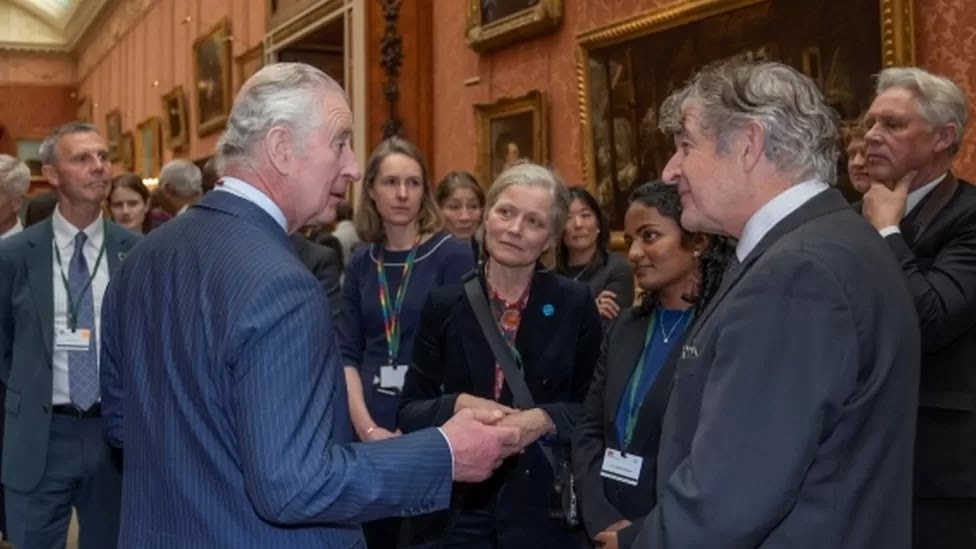
On Friday the King hosted global leaders at Buckingham Palace to support action on restoring the natural world.
Speaking at the reception, the book's co-author Chair of Natural England Tony Juniper said the King wanted to empower young people.
"I think he's been struck by the level of energy and passion shown by young people on these subjects, and was keen to put something into their hands which was about those basic facts and figures, basic ideas, but also with his personal message in there," Mr Juniper said.
In 2017 the King and Mr Juniper wrote a book for adults about climate change. The new publication aims to make the topic accessible for 7-11 year-olds and is "trying to bring the facts to the fingertips of the people who've got most to gain by finding solutions in time," Mr Juniper explained.
Leaders from government, business, charities and indigenous communities went to the palace reception to support stronger action on protecting biodiversity.
It followed promises made by nations at the UN summit COP15 in December to prevent what is called the "sixth mass extinction event". Biodiversity - the variety of living things - is declining faster than at any time in human history.
IMAGE SOURCE,GETTY IMAGES
Image captiAt COP15 leaders agreed to stop the extinction of species and raise £167 billion ($200 billion) a year to protect nature.
In the historic deal known as the Global Biodiversity Framework, almost 200 countries pledged to protect 30% of the planet by 2030 to allow nature to flourish.
The King's reception followed a major government meeting aimed at kick-starting private fundraising to deliver on promises made at the UN's COP15 summit in December.
Environment Secretary Thérèse Coffey said the meeting was aimed at mobilising private finance to meet goals set at COP15.
"Instead of constantly playing catch-up and repairing the damage that's subsequently happened, which can cost even more money, let's get solutions now," Ms Coffey told BBC News.
In recognition of their role as protectors of the natural world, indigenous leaders from the Amazon also met King Charles at Buckingham Palace. One placed a necklace of seeds around the King's neck.
"We want the King to be an intermediary for our people with the other countries," said Amazon leader Domingo Peas.
Biodiversity is in crisis across the globe - half of coral reefs have disappeared and scientists say 75% of the Earth's surface is degraded. Between 2001 and 2021 the world lost 437 million hectares of tree cover.
Human activity plays a big role on this. In 2019, a United Nations report said that harvesting, logging, hunting and fishing are causing overexploitation, of animals, plants and other organisms.
The UK is one of most nature-depleted nations in the world, according to experts.
King Charles has spent much of his life campaigning to protect the environment. In November he hosted a reception to discuss tackling climate change ahead of the UN COP27 summit in Egypt.
Food Insecurity is starting because of the Climate Emergency!
It's only in it's early stages but it's definitely here!
Tomatoes, Cucumbers etc are in short supply. Why?
In the winter months the UK imports around 95% of its tomatoes and 90% of its lettuces, most of it from Spain and north Africa, according to trade group the British Retail Consortium (BRC).
But Southern Spain has been suffering unusually cold weather and in Morocco crop yields have been affected by floods, while storms have led to ferries being delayed or cancelled.
Clock ticking on UK food-security action, NFU warns
UK supermarkets face tomato shortages
It led to Morocco barring exports of tomatoes, onions and potatoes to West African countries earlier this month as it tried to protect exports to Europe.
The UK also gets some produce at this time of year from domestic growers and the Netherlands But farmers in both countries have cut back on their use of greenhouses to grow winter crops due to higher electricity prices.
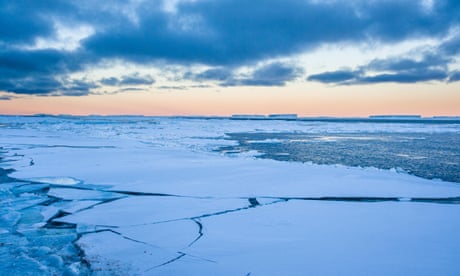
StrongerEl Niñoevents due to global heating may accelerate irreversible melting of the Antarctic ice sheet and ice shelves and the rise in sea levels, according to research from Australia’s premier government science agency.
Previous studies have found that rising atmospheric greenhouse gas concentrations are expected to increase the magnitude of the El Niño Southern Oscillation (Enso), the planet’s most significant year-to-year climate fluctuation and a major driver of extreme droughts and floods. Extreme warm El Niño events and cool La Niña events are expected to become more frequent as the planet heats.
Relatively little has been known about the impact of Enso changes in Antarctica. A new study published this week in the journal Nature Climate Change led by CSIRO researchers found stronger El Niño events were likely to have divergent impacts in the ocean surrounding the southern continent.
The examination of 31 climate models found stronger El Niños may accelerate the heating of deeper ocean waters while slowing the pace of warming on the surface as westerly winds along the continental shelf become less intense.
The chief research scientist at CSIRO and the study’s lead author, Dr Wenju Cai, said the former would lead to the ice sheet and ice shelves melting faster. The study did not look at how much more rapidly melting may occur.
The Antarctic ice sheet is estimated to contain about 30m cubic kilometres of ice, enough to raise the global sea level by 70m over centuries if completely melted. A separate recent study estimated that global temperatures 1C above pre-industrial levels – a point already passed – would be enough to gradually collapse the West Antarctic ice sheet, leading to four metres of sea level rise.
“This new research shows that stronger El Niños may speed up warming of deep waters in the Antarctic shelf, making ice shelves and ice sheets melt faster,” Cai said. “Our modelling also revealed that warming around the edges of floating sea ice is slowed during this process, slowing down the melting of sea ice near the surface.”
Cai said the results suggested stronger El Niños could have a “double whammy” effect as it would lead to worsening extreme weather – heat, drought and bushfire risk in eastern Australia and floods in California, Peru and Chile – and accelerate sea level rise, causing more extreme coastal inundation.
Dr Ariaan Purich, from Monash University’s School of Earth Atmosphere and Environment and a report co-author, said the results could have broad implications for the global climate system.
“Continuing to understand how Enso will respond to climate change is a critical area of climate research,” she said. “There is still a lot more we need to understand about processes influencing shelf temperatures, and the finding is an important piece of the puzzle.”

 Ian Bates, Roger Hallam and Karen Matthews have been granted bail after being imprisoned without trial since November. They were among 18 in court on charges related to the M25 actions in November.
 Abigail Percy-Ratcliff and Daniel Shaw were also granted bail but must return to prison while they await bail hearings in other cases. All of the remaining 13 Just Stop Oil supporters appearing today had spent time on remand last year and some were subsequently required to wear electronic tags and made subject to a curfew.
  Some of those appearing today were preemptively arrested in police raids at their homes after attending a Zoom call in which a Sun journalist Scarlet Howes was present. The Sun alleged it had “infiltrated” the public meeting and boasted of tipping off the police and enabling National Highways to secure a public injunction.
 Sign our petition calling for the release of political prisoners at http://buff.ly/3HtNX8L
 Get involved with the campaign, find your local talk at http://buff.ly/3ceOCzG
 Support us at http://buff.ly/3XaSV17